Living with marble in a kitchen that actually gets used
Marble rewards the owner who knows what to expect from it and frustrates the one who does not.
September 30, 2026 · 3 min read
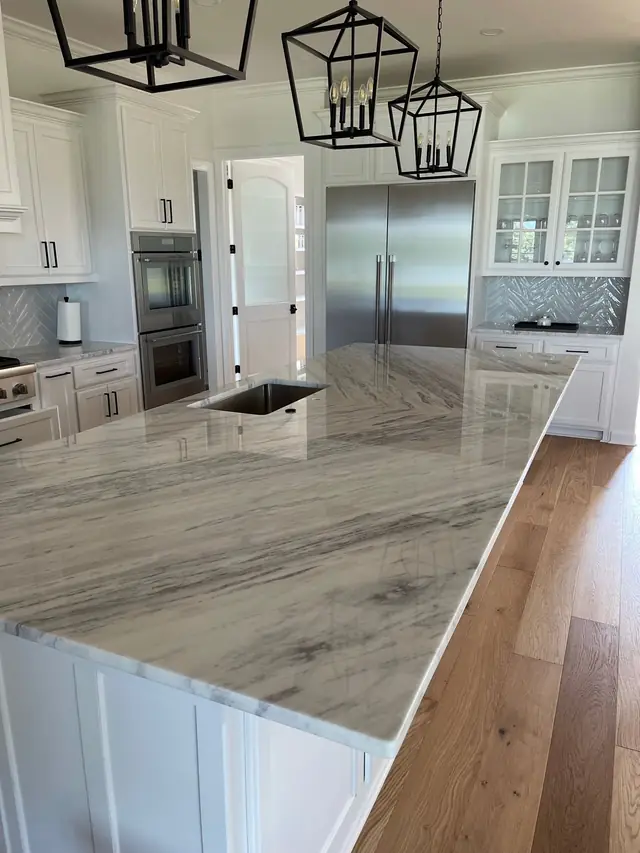
Marble is the stone people picture when they picture a beautiful kitchen, and it is also the stone fabricators warn you about. Both reputations are fair. Marble is a calcium-based stone, and that chemistry decides how it lives with cooking, spills and time. If you know what to expect, it can be a very good countertop. If you expect it to look the same on day one thousand as on day one, it will disappoint you.
Etching is not the same as staining
People use the two words interchangeably, but they are different problems. A stain is a liquid that has soaked into the pores of the stone and left colour behind. An etch is a chemical reaction: acid dissolves a thin layer of the surface and leaves a dull, slightly rough patch. Lemon juice, vinegar, tomato, wine and many cleaning products can all do it, and the mark can appear within minutes.
The distinction matters because the fixes differ. Some stains can be drawn out with a poultice, which is a paste that pulls the liquid back out of the stone. An etch is damage to the surface itself, so it has to be repolished or honed away, and that is usually work for a fabricator or a stone restorer rather than a weekend project.
Honed or polished
A polished finish is glossy and reflective, and it shows off the veining beautifully. It also shows etching more than any other finish, because a dull patch stands out against a mirror shine. A honed finish is matte and soft to the eye. Etches still happen on honed marble, but they blend into the surface, and over the years the stone develops an even, worn patina that many owners come to prefer.
The trade-off is that a honed surface can look a little more absorbent, so it rewards quick wiping. Neither finish is free of maintenance. Polished suits someone who loves the shine and accepts that it will change. Honed suits someone who would rather the change happen gently.
What sealing does and does not do
A sealer fills and lines the pores so liquids soak in more slowly. That buys you time to wipe up oil, coffee or wine before they leave a stain. What a sealer cannot do is stop acid from etching, because etching is a change to the stone itself rather than a liquid getting in. Sealers also wear down with use and cleaning, so most shops advise renewing them from time to time. Ask the fabricator which product they use and how often they suggest reapplying it.
Habits that keep marble looking good
- Use a cutting board for anything with juice in it, and wipe up lemon, vinegar and tomato as soon as you notice them.
- Put a coaster under wine glasses and a trivet under hot pans.
- Clean with a mild, pH-neutral soap and a soft cloth rather than an all-purpose spray.
- Keep oils, dressings and sauces on a tray rather than standing them directly on the stone.
Who should choose marble, and who should not
Marble suits people who see wear as part of the appeal. A baker rolling dough on it, a household that cooks often and does not mind a soft patina, or an owner who wants a large island as the centrepiece of the room will usually be happy. Many kitchens split the job: marble on the island, where the eye lands, and a harder stone such as granite or quartz on the working counters around the range and sink.
It is a poor match for anyone who will be upset by the first etch, or who wants counters that need no attention at all. In that case quartz, quartzite or granite will let you sleep better. Before committing to any stone, ask for an offcut of the exact material and try it at home. Leave a drop of lemon juice on it for five minutes, wipe it off, and look at the spot in daylight. Ten minutes of testing tells you more than any description can.
Emcar Stone Studio in Springdale sells marble alongside quartz, quartzite, granite, porcelain and soapstone, so the comparison can be made in one visit. Price depends on the slab and the layout, and a free estimate is the way to find out.
You can look at the stone in person at 142 N Maestri Rd, Springdale, Monday to Friday between 8:00 AM and 4:00 PM. The number is (479) 977-6259.
Emcar Stone Studio, (479) 977-6259
Call (479) 977-6259More articles
Quartz and quartzite share a name and very little else
One is manufactured and one is quarried, and the difference shows up in how each counter looks, ages and gets cared for.
Soapstone counters and the way they age
A soft charcoal stone that records the life of a kitchen and can be renewed with a sheet of sandpaper.