Cut-outs
Sinks, chosen with the stone
Stainless steel and custom porcelain sinks, picked alongside the slab so the cut-out is made for the bowl that is actually going in.
Chapter 01
Undermount, drop-in and apron-front are three different cut-outs
A sink is not a product you drop into a hole. Each kind asks something different of the stone and of the cabinet below it, and the cut-out is made for one bowl only. Change the bowl after the stone is cut and the opening is wrong.
An undermount hangs beneath the stone, so the edge of the cut-out is exposed and has to be ground and polished like any other edge of the counter. It is the look most people picture in a stone kitchen: a clean line where the top meets the bowl. The sink is fixed to the underside of the stone, so the cut has to be exact.
A drop-in sits on top with its rim resting on the counter, which forgives a slightly rough cut because the rim covers it. An apron-front, sometimes called a farmhouse sink, shows its whole front panel, so the cabinet below is cut back to receive it and the stone has to meet the sink at exactly the right height. All three are decided before fabrication, alongside the cabinet, not after.
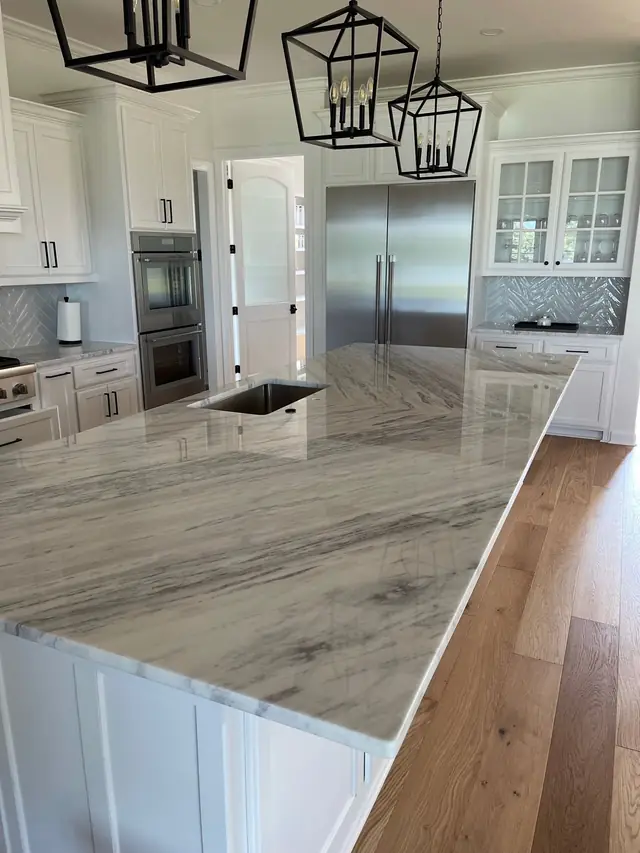
Large white and grey marble island with an undermount sink set into the stone
Stainless steel and porcelain, compared honestly
Emcar sells stainless steel sinks and custom porcelain sinks, and they suit different kitchens. Stainless steel is forgiving. It does not chip, and it takes a knock from a cast iron pan. It scratches over time, and in most kitchens those fine scratches settle into an even satin finish, which some people like and some cannot stand. It is also louder under running water and dropped dishes, though padding on the underside of the bowl takes some of the drum out of it.
Porcelain is heavier, glossier and quieter. It reads as part of the room and not as a piece of equipment, and it is the natural partner for an apron-front. It can chip if something heavy lands on the rim, and a chip in white porcelain shows. That is the trade for the look.
Against stone, the two behave differently. Steel picks up the grey of a marble or a light quartz and quietly disappears into it. Against black granite or soapstone, a white porcelain bowl is a deliberate statement, a bright oval in a dark top. Neither is right by default. The bowl should be picked with the slab in front of you, not after it.
Chapter 03
The details around the bowl
The reveal is how the edge of the stone sits against the rim of the bowl. Leave a slim band of the rim showing and the fit is forgiving and easy to wipe. Bring the stone right up to the edge of the bowl, or just over it, and the line is crisper, but the polished edge of the cut-out takes more work and more care. Each is easy to choose on paper and hard to change once the stone is cut.
Then the holes. A faucet needs one opening or three or more, depending on the fixture, and a soap dispenser or a sprayer adds more. They are drilled where the fixture is meant to sit, with enough stone left between the hole and the edge of the top or the sink to stay strong. That is why the faucet should be chosen before the stone is cut.
Last, the rail of stone in front of and behind the sink. It is the narrowest part of the counter, and it is thinner still after the cut-out. A good layout keeps that rail wide enough to carry weight and puts the seam elsewhere, so the stone around the bowl is one unbroken piece. A drainboard groove, if you want one, is cut into the top beside the sink and slopes back toward the bowl.
From our own description of the range: stainless steel sinks and custom porcelain sinks.
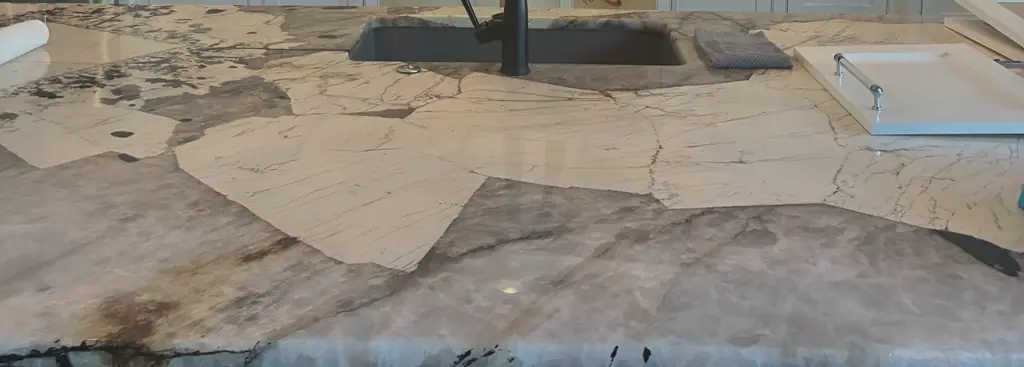
Two undermounts
The same cut-out on pale stone and on dark.
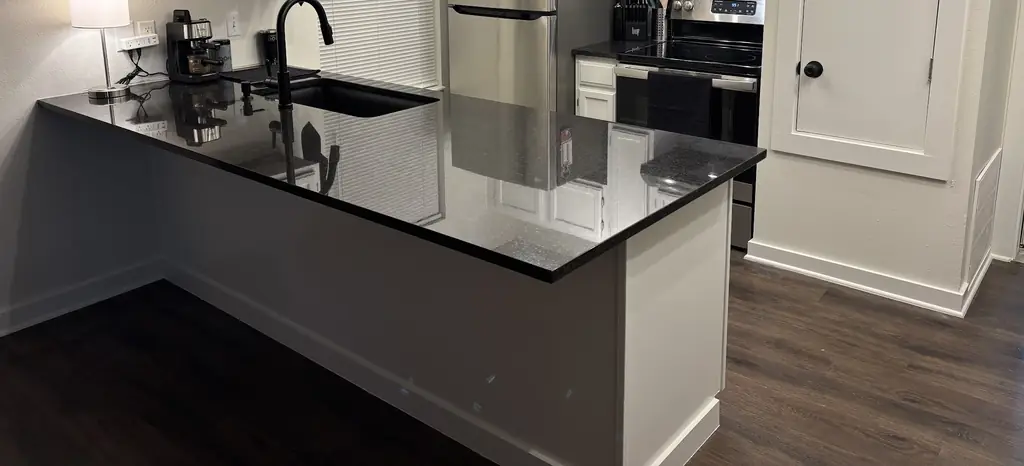
The quartzite island above and the black granite peninsula beside it both carry an undermount sink, and the two read nothing alike. On pale stone the bowl is a quiet shadow. On polished black granite it is a hard-edged opening in a dark top. The cut is the same craft in both, and the choice of bowl changes how each one looks.
To see how an opening is cut and set, read the fabrication page, or look at how a kitchen counter is planned around the sink. Estimates are free.