Homes
Kitchen and bathroom countertops for Northwest Arkansas homes
Islands, perimeter runs, backsplashes and vanity tops in six stones, laid out so the seams, the sink and the stone all agree.
Chapter 01
Where a kitchen counter actually fails
Most counters that disappoint were doomed before anyone carried them into the room. A seam lands across the sink cut-out, where the stone is narrowest and the stress is highest. An overhang reaches past the cabinet with nothing under it. A polished marble slab goes beside the range, and within a month it wears a dull ring from every splash of lemon or vinegar.
None of that is an installation error. It is a layout and material decision, made long before the truck arrives. The stone is rarely the problem. Where it sits, where it is joined and what it is asked to do every time the kitchen is used are the problem.
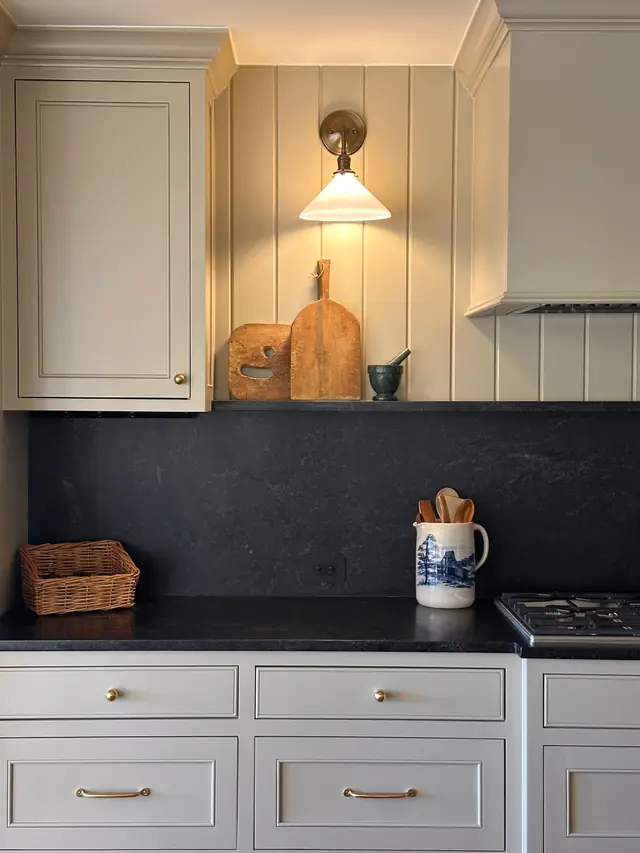
Honed black soapstone kitchen counter with a full slab backsplash and a stone shelf against cream cabinets
How the stone gets chosen and laid out
Choose the slab in person. A photograph flattens the two things that matter most, the direction the veining runs and the way the surface holds light. Stand in front of the real slab with your cabinet door and your floor sample beside it.
Layout comes next. On a veined stone the pattern can run the length of a counter, or turn down a waterfall end so the top and the side read as one piece. A full slab backsplash carries the same pattern up the wall with no grout lines to interrupt it. Every one of those choices decides where the seams fall, and seams belong in the plain stretches of counter, away from the sink and the cooktop.
One customer, Martin Branum, put the method in a sentence: “They measure precisely and they don’t cut material until every variable is nailed down.” Stone cannot be put back once it is cut, so the order matters. The sink, the faucet, the cooktop and the overhang get settled first, and the saw comes last.
Chapter 03
What each of the six stones asks of its owner
Every stone asks something. Quartz and porcelain ask almost nothing: no sealing, and a damp cloth for the daily wipe. Quartz is engineered, so the pattern stays consistent along the run. Porcelain is a thin fired slab with the pattern on its surface, which makes the choice of edge matter more.
Granite and quartzite are natural and hard. Both want a sealer applied now and then, so that a spill sits on the surface instead of soaking in. Granite is speckled or sweeping and different in every block. Quartzite has movement close to marble in a harder body, and despite the name it is not the same material as quartz.
Marble and soapstone ask the most. Marble etches wherever an acid sits on it, so expect dull marks near the coffee maker and the range, or choose a honed finish that lets them soften into the surface. Soapstone is dense and matte and darkens with use, and a scratch can be sanded out. Marble suits a vanity or a baking counter. Soapstone suits a cook who wants a surface that ages in front of them.
Rebekah Gerbig, Google review: “She not only helped me stay within budget but also provided valuable design guidance to ensure everything coordinated perfectly with my other selections.”
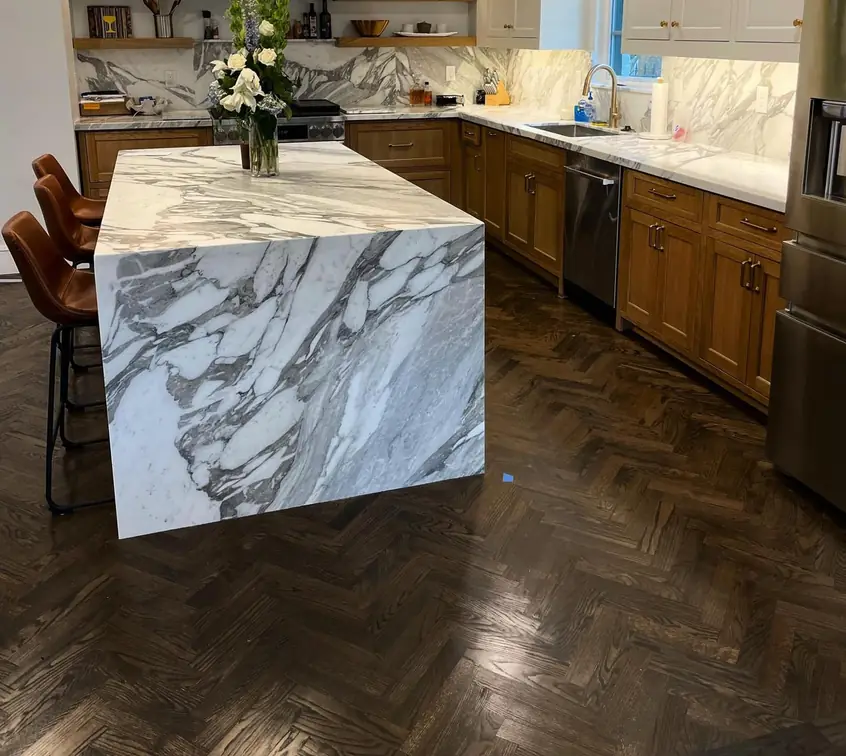
Two ends of the range
The showpiece island and the everyday peninsula
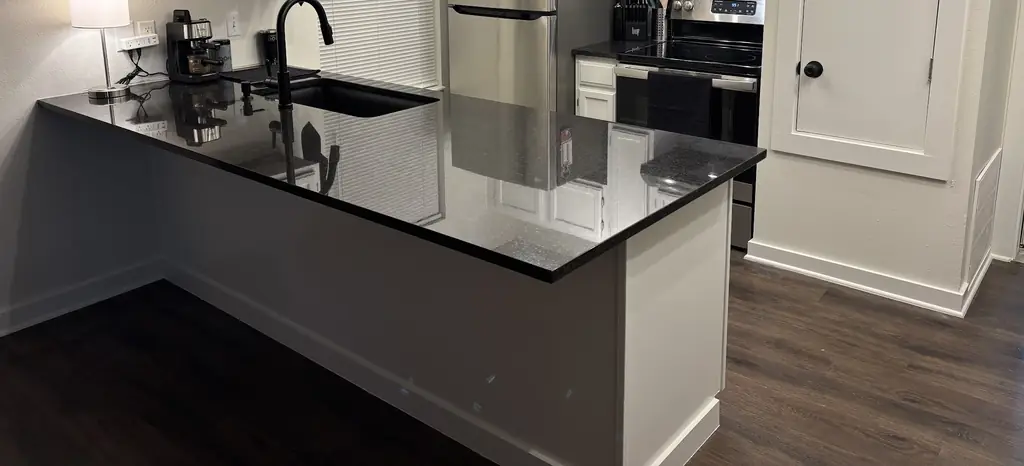
The white marble island with its waterfall end is the showpiece end of the work. The black granite peninsula below, with an undermount sink in a modest white kitchen, is the everyday end. Abby Travis wrote that Emcar “had plenty of options that could work with all kinds of budgets.” The cutting and edging are covered on our fabrication and installation page, and the bowl that goes into the cut-out is on our sinks page.